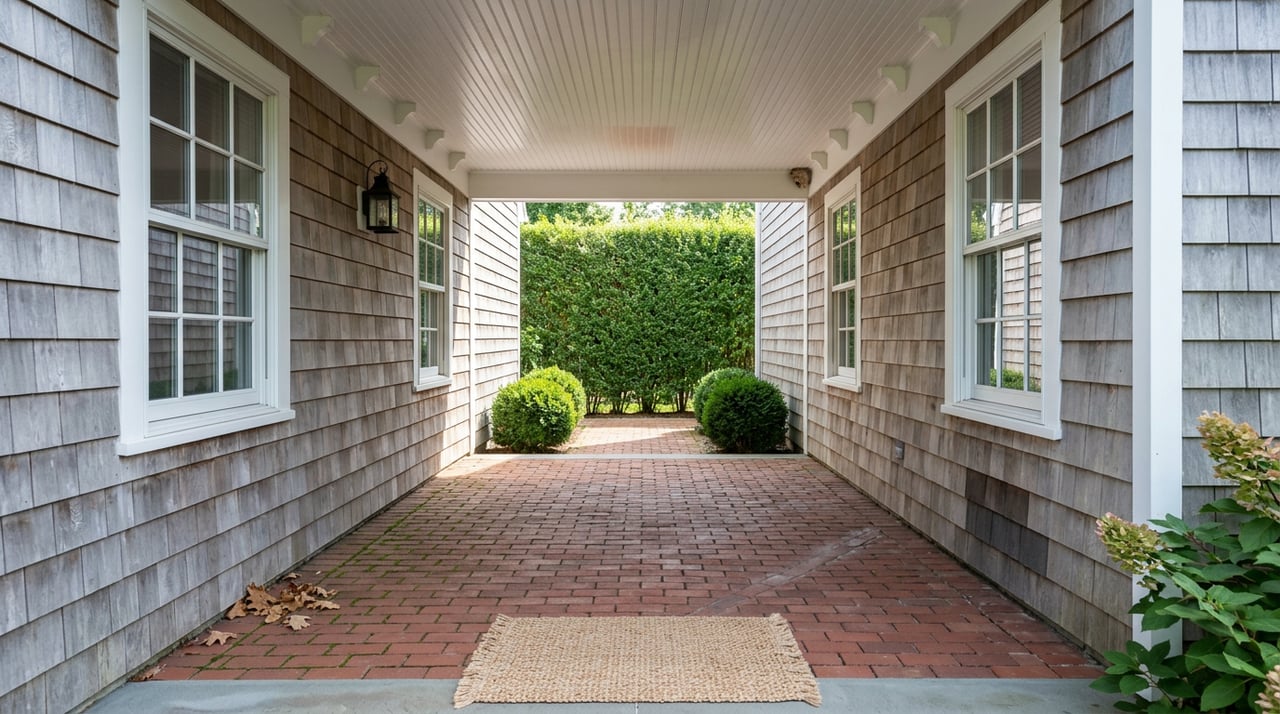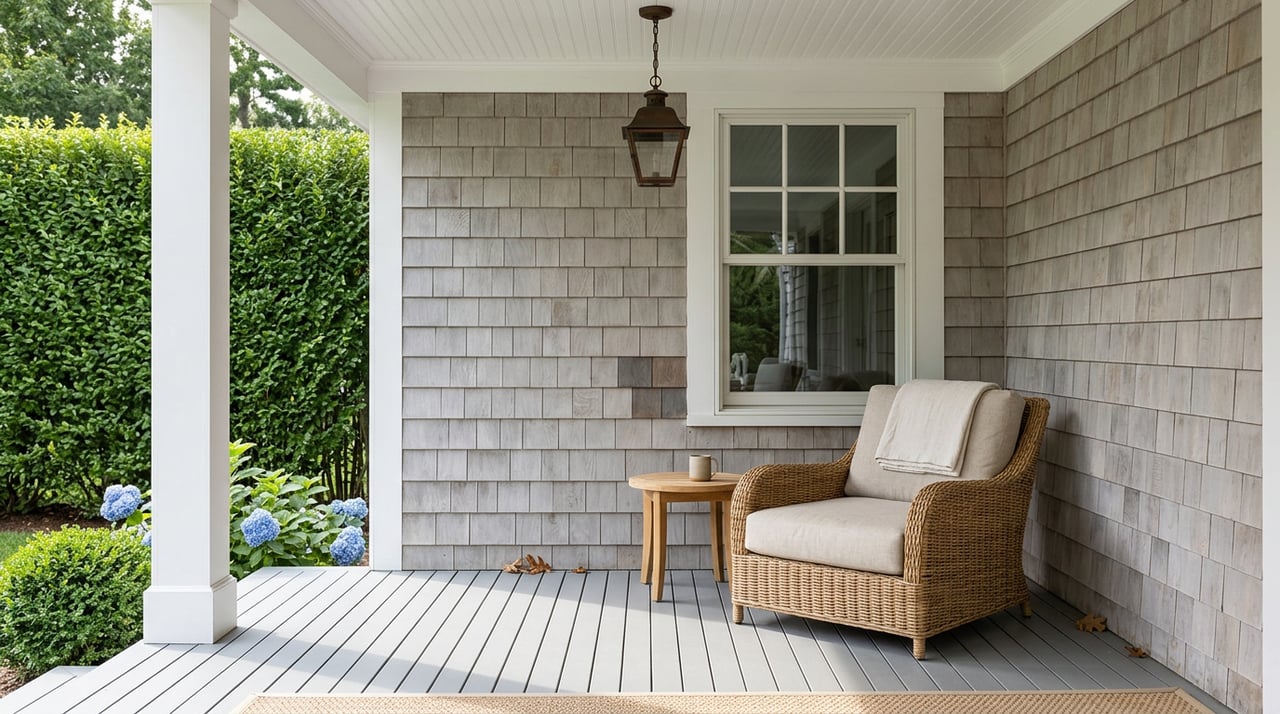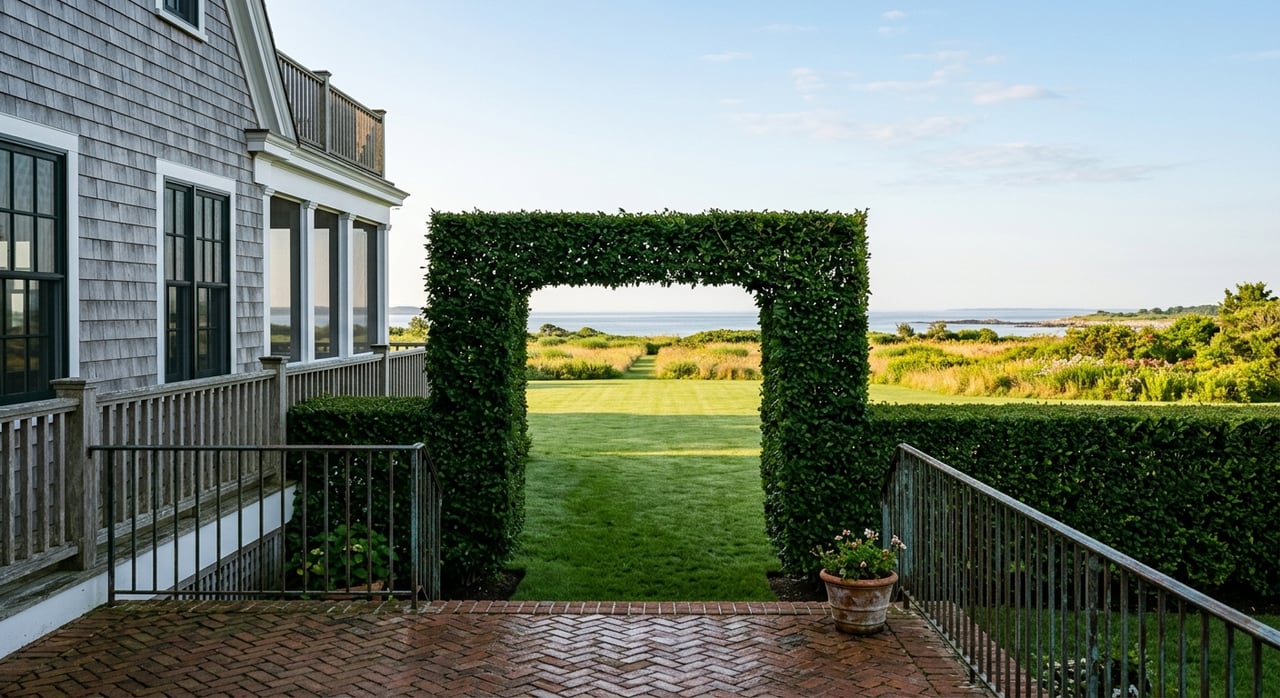
If you are trying to understand why Sagaponack commands some of the Hamptons’ highest prices, start with the land, not just the houses. In this village, what surrounds a property can matter as much as the architecture itself. When you understand how open space, farmland, zoning, and ocean proximity shape the setting, you can better understand what buyers are truly paying for. Let’s dive in.
Why landscape matters in Sagaponack
Sagaponack is small by any standard. Village materials describe just 4.56 square miles between Bridgehampton and Wainscott, with land use that is predominantly single-family residential and agricultural, plus very limited commercial or public uses concentrated mostly along Route 27.
That compact, low-density layout changes the value equation. In a more conventional suburban market, buyers may focus first on square footage or finishes. In Sagaponack, parcel orientation, neighboring land, protected views, and the likelihood of future change often play a much larger role.
Protected setting drives premium
A key reason Sagaponack stands apart is that its landscape premium is not only visual or emotional. It is reinforced by the village code and planning framework.
Minimum lot sizes in the residence districts are large. The R-40 district requires at least 40,000 square feet, the R-80 district requires 80,000 square feet, and the R-120 district requires 120,000 square feet, with substantial minimum lot widths across each district.
Those rules help preserve space between homes and support the estate character many buyers seek. In practical terms, they also reduce the chance that a prized parcel will be surrounded by a more conventional pattern of tighter subdivision.
How preservation supports value
Sagaponack’s code goes further than simple lot-size controls. In the Agricultural Overlay District, subdivisions must preserve meaningful open space, with required preservation levels of at least 35% in R-40, 50% in R-80, and 65% in R-120.
The code also protects Class I and II agricultural soils from removal except where specifically allowed. That matters because farmland here is not just leftover land. It often functions as a long-term visual and spatial buffer that helps maintain privacy, sightlines, and the rural character that buyers value.
On agricultural, easement, or preserved parcels, site-plan review calls for maximum preservation of open space, minimal disturbance of prime agricultural soil, and maintenance of unencumbered public vistas. Conservation-opportunity subdivisions are also intended to reduce scenic impacts from road frontages and protect views of ocean, bays, wetlands, and agricultural landscapes.
Taken together, these rules support something rare in luxury real estate: a stronger expectation that the surrounding setting will remain low-intensity and visually open. In Sagaponack, that expectation can be part of the asset.
The role of open-space land
Another important value layer is land set aside for open-space purposes. The village’s Open Space Conservation and Park District includes beach areas, nature preserves, parks, and recreation land, and it generally limits buildings to structures customarily related to park uses.
For buyers and owners, that can help preserve a sense of openness that is difficult to replicate elsewhere. It also means that in certain parts of the village, the neighboring landscape is not simply undeveloped today, but more structurally protected from ordinary future building.
South of Montauk Highway
Properties south of Montauk Highway often derive value from proximity to the Atlantic, open exposure, and irreplaceable outlook. Village mapping suggests these parcels sit closer to shoreline overlays and preserved open-space areas, even though those labels are not formal market categories.
For many buyers, this is the most powerful lifestyle setting in Sagaponack. Ocean light, beach access, and a direct connection to the shoreline can create a level of scarcity that strongly influences pricing.
But that premium comes with tradeoffs. The code requires site-plan review for new construction on waterfront lots and on land within 400 feet landward of the coastal erosion hazard area line, and new or replacement structures must be set back at least 125 feet from the crest of ocean beach dunes.
New York State also requires a Coastal Erosion Management Permit for regulated activities in coastal erosion hazard areas. So while ocean adjacency can support exceptional value, it can also bring a narrower build envelope, more review, and more constraints on expansion or reconfiguration.
Inland and north of the highway
Inland parcels and those north of Montauk Highway often tell a different value story. Here, price is frequently supported by privacy, larger acreage, and uninterrupted surroundings shaped by preserved farmland and open space.
Village land-use and preservation maps show a landscape where agriculture and recreation or open-space uses remain closely tied to the residential pattern. That can give these holdings the feel of collector estates rather than neighborhood lots.
For many high-end buyers, this kind of setting has its own luxury appeal. Instead of paying primarily for shoreline exposure, you may be paying for calm, scale, long views, and a stronger sense of insulation from change.
Why farmland can add value
In many markets, nearby farmland might be seen as neutral land use. In Sagaponack, it can work more like an amenity.
When preserved farmland protects privacy, keeps sightlines open, and lowers the odds of future densification, it can directly support value. The village’s emphasis on agricultural continuity, protected vistas, and open-space preservation helps explain why buyers may place a premium on parcels adjacent to or oriented toward farm fields.
This is one of the clearest ways Sagaponack differs from less regulated luxury markets. Here, the surrounding landscape is not just scenery. It can influence what your property feels like, how durable that feeling may be, and what future buyers are likely to recognize as scarce.
The tradeoff on beach-adjacent lots
The closer a parcel moves toward the dune line or shoreline, the more a buyer may be paying for a truly irreplaceable setting. Those lots can offer some of the village’s most distinctive lifestyle value.
At the same time, the same rules that protect the shoreline can limit flexibility. In many cases, the highest-amenity parcels are also the hardest to modify, enlarge, or reposition.
That tension is central to Sagaponack pricing. The best views are often the most difficult to recreate, but also the most regulated to preserve.
Market data supports the thesis
The broader Hamptons luxury market remains strong, and recent data helps show how far Sagaponack stands above the regional baseline. In the first quarter of 2026, the Hamptons median sales price reached $2,412,500 and the average sales price reached $4,257,787, with 21.2% of sales above $5 million.
Sagaponack’s pricing sits in a different tier. In the fourth quarter of 2025 Elliman and Miller Samuel hamlet table, Sagaponack’s median sales price was $9.5 million, the highest among the Hamptons hamlets listed and far above the broader Hamptons median of $2.3375 million.
That gap helps confirm what the local maps and code already suggest. Buyers in Sagaponack are paying not only for the residence itself, but also for large parcel geometry, protected surroundings, and a stronger probability that adjacent land will remain open, farmed, or otherwise low-intensity.
What buyers and sellers should watch
If you are evaluating a Sagaponack property, it helps to look beyond finishes, room count, and recent renovation work. The landscape context may be just as important.
A few factors can carry outsized weight here:
- The residence district and minimum lot dimensions
- Whether the parcel is near preserved open space or agricultural land
- The orientation of the home and its sightlines
- Any nearby easements or preserved land protections
- Whether the lot is waterfront or near coastal erosion hazard areas
- How regulations may affect future expansion, reconfiguration, or new construction
For sellers, these same factors can shape how a property should be positioned. In a market like Sagaponack, value is often tied to what cannot easily be replicated, including privacy, outlook, and protection from future change.
A landscape-first way to read Sagaponack
The clearest way to understand Sagaponack home values is to think of land use as part of the property itself. In this village, the setting is not just a backdrop. It is a core component of the investment and the experience of ownership.
That is why two large homes with similar finishes can tell very different value stories. One may be prized for ocean exposure and rarity near the dune line, while another may command attention because it sits within a quieter inland landscape defined by preserved fields, large-scale parcel geometry, and lasting privacy.
If you are buying or selling in Sagaponack, reading the landscape correctly is essential. For discreet guidance on trophy assets, protected settings, and Hamptons micro-market positioning, connect with Harald Grant Real Estate.
FAQs
How does Sagaponack’s landscape affect luxury home values?
- Sagaponack values are heavily influenced by protected open space, large lot zoning, farmland adjacency, ocean proximity, and how much of the surrounding setting is shielded from future change.
Why do preserved farmland and open space matter in Sagaponack?
- Preserved farmland and open space can support privacy, maintain long sightlines, and reduce the likelihood of nearby densification, which often strengthens a property’s appeal and scarcity.
Are oceanfront properties in Sagaponack always worth more?
- Oceanfront and beach-adjacent properties often carry a strong lifestyle premium, but they also face tighter setbacks, site-plan review, and coastal erosion permitting constraints that can affect flexibility.
What zoning rules most influence Sagaponack property values?
- Large minimum lot sizes, open-space preservation requirements in the Agricultural Overlay District, and protections for scenic views and agricultural soils are among the rules that most shape value.
Why is Sagaponack priced above much of the Hamptons market?
- Recent market data shows Sagaponack at the top of Hamptons hamlet pricing, which reflects buyer demand for rare settings where the landscape, parcel scale, and preservation framework help protect long-term scarcity.