If you have ever wondered why two oceanfront Southampton addresses can feel worlds apart, you are asking the right question. In this market, prestige is not just about being near the water. It is also shaped by frontage, privacy, historic context, and what village rules may allow you to change over time. This guide breaks down Southampton’s key oceanfront micro-markets so you can understand how Meadow Lane, Gin Lane, and the nearby estate corridors differ in real terms. Let’s dive in.
Why Southampton Micro-Markets Matter
Southampton Village has deep roots, dating to 1640, and it has long balanced coastal appeal with a strong sense of place. The arrival of the Long Island Rail Road in 1872 helped transform the village into a summer resort community, and today the village identifies about seven miles of oceanfront and eleven individual beaches.
That history still matters when you evaluate property here. Southampton’s oceanfront addresses sit within a landscape shaped by preservation rules, architectural review, and environmental constraints. In practice, that means your experience of value may depend as much on review standards and lot configuration as on the view itself.
Meadow Lane and Beach Road Explained
Meadow Lane and Beach Road Are the Same Corridor
One of the first things buyers ask is whether Meadow Lane and Beach Road are different places. In Southampton Village materials, Beach Road is also known as Meadow Lane. That shared naming reflects the corridor’s layered history, with early estate development followed by later expansion farther west.
The village’s 2024 Modernist Homes report notes that grand summer homes were established along Beach Road, or Meadow Lane, just east of Halsey Neck Lane in the 1920s and 1930s. The same report says the road was extended west beyond Halsey Neck Lane by the early 1960s and then farther toward Road F and Shinnecock Inlet.
Why Meadow Lane Feels So Distinct
Meadow Lane is the stretch most closely associated with Southampton’s true barrier-beach oceanfront. That identity gives it a rare kind of direct Atlantic exposure, but it also comes with meaningful environmental and zoning considerations.
A 2023 New York State DEC notice described the Meadow Lane segment west of Halsey Neck Lane as a barrier beach with wetlands, dunes, coastal erosion hazards, and flood hazards. The same notice explained that the R-80 segment on Meadow Lane was being reclassified to R-120, aligning it with most remaining village oceanfront.
What Buyers and Sellers Notice on Meadow Lane
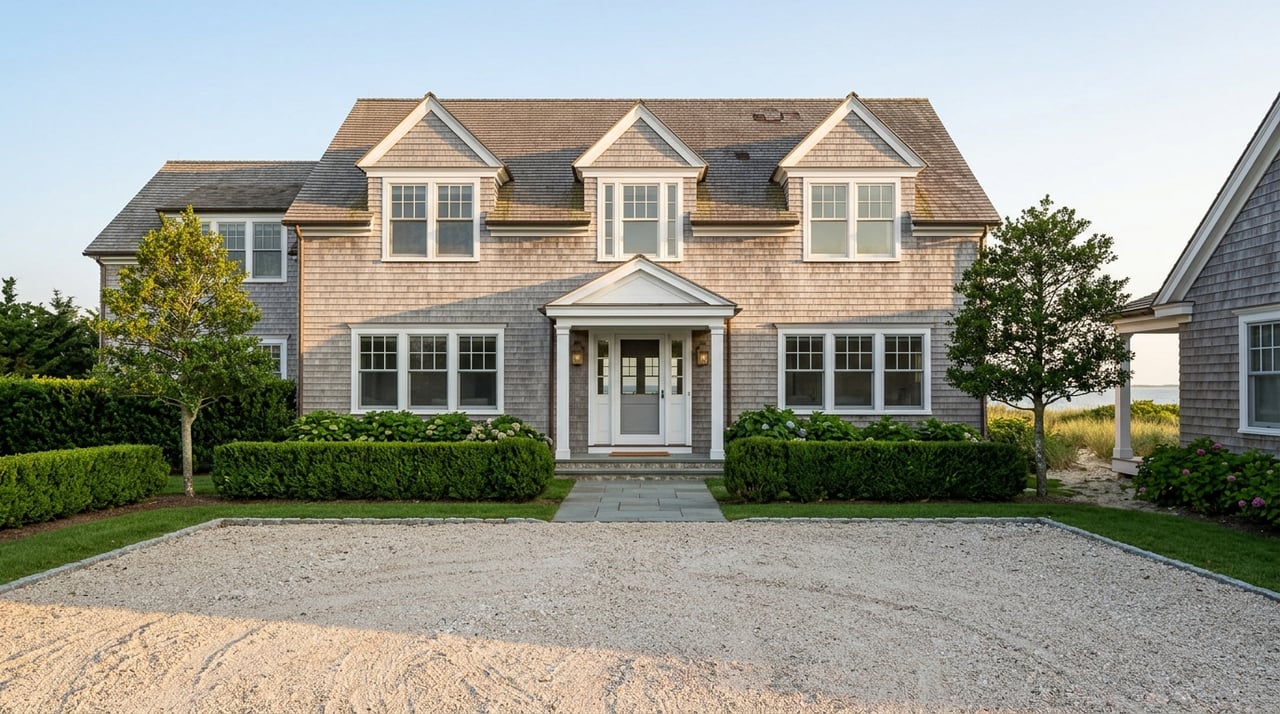
In practical terms, Meadow Lane tends to be defined by seafront acreage and strong architectural presence. Village materials cite examples like 1360 Meadow Lane, a 2.75-acre seafront home, and 1820 Meadow Lane as an example from a later oceanfront estate era.
For buyers, that often translates into a search focused on scale, dune-side setting, and scarcity. For sellers, it means the story of a property often includes not only frontage and design, but also how the parcel fits within the corridor’s tighter environmental and zoning framework.
Gin Lane’s Different Kind of Prestige
Gin Lane Is Closer to the Village Core
Gin Lane offers a different experience from Meadow Lane, even though both sit within Southampton’s top-tier address map. A National Register draft history says Gin Lane opened in 1664, making it one of the village’s older and more historically rooted corridors.
It also sits near Lake Agawam and close to the village core. The village’s Lake Agawam plan says the 60-acre lake runs from the west part of the downtown business district south of Jobs Lane to the Southampton Bathing Corporation along Gin Lane, with the Atlantic Ocean beyond.
The Lake and Ocean Relationship Shapes Value
This geography gives Gin Lane a layered appeal. You are not looking only at ocean proximity. You are also seeing the relationship between Lake Agawam, nearby open spaces, and village access.
The same lake plan notes that the lake is readily visible from Jobs Lane, Pond Lane, and Gin Lane. It also identifies Gin Lane as a location for shoreline and future walking-trail improvements, reinforcing how visible and connected this corridor is within the village setting.
Privacy on Gin Lane Often Comes Through Screening
Gin Lane prestige is often tied to privacy controls and careful siting, not just open beachfront exposure. Board minutes from a 2022 hearing for 7 Gin Lane show discussion around a wetland setback that pushed the house back from Gin Lane and from views over Lake Agawam.
Those same minutes also referenced hedge screening, tree planting, and a mockup used to judge height and visibility from the street. That tells you something important about this corridor: the feeling of exclusivity may come from layered screening, setbacks, and landscape planning as much as from a direct water view.
First Neck, Halsey Neck, and Old Town Road
These Streets Expand the Search
If you are looking for Southampton oceanfront or ocean-adjacent prestige, the search often broadens beyond Meadow Lane and Gin Lane. First Neck Lane, Halsey Neck Lane, and Old Town Road are neighboring estate corridors that can appeal to buyers who value architectural pedigree, large parcels, and privacy.
These streets may feel more estate-like and less purely beachfront than Meadow Lane. Still, they remain closely tied to Southampton’s top luxury positioning because of lot size, screening, and historic character.
Architectural Pedigree Matters Here
The village’s draft survey identifies The Dolphins at 400 First Neck Lane as one of the few remaining Stanford White-designed houses in Southampton. It also notes related estate structures at 292 and 376 First Neck Lane, along with the Tyng House at 689 Halsey Neck Lane as an early Streamline Moderne and Art Deco example.
That record gives these corridors a different kind of market strength. In some cases, the appeal is less about pure ocean edge and more about legacy architecture, estate scale, and a setting shaped by mature landscape design.
Old Town Road Shows More Variation
Old Town Road has a more mixed fabric than some of the older estate corridors. The village survey describes a blend of contributing historic homes, altered properties, and newer infill construction, including a 2025 new house at 111 Old Town Road.
For a buyer, that may mean more variation in streetscape and property type. For a seller, it means market positioning often depends on the specific parcel, improvements, and how the home fits into the corridor’s evolving character.
Historic Review and What It Can Mean
Southampton Has a Strong Preservation Framework
Southampton Village’s homeowner guide says the Southampton Village Historic District was created in 1989 and later augmented with the Beach Road, Wickapogue Road, and North Main Street districts. The village’s survey materials say the district includes more than 430 contributing historic resources.
That is not just background detail. It directly affects how some properties are maintained, altered, expanded, or redeveloped over time.
Exterior Changes May Require Review
According to the village homeowner guide, exterior work, demolition, and new construction in historic district areas require review. The same guide says BARHP pays close attention to compatibility, historic trees, and landscape screening.
For buyers, that can mean a more predictable visual character along certain streets. For owners considering changes, it means due diligence should include a close look at how review standards may shape timelines, design choices, and what is realistically achievable.
How to Compare Southampton’s Oceanfront Corridors
Focus on Exposure, Privacy, and Flexibility
When you compare Southampton micro-markets, it helps to go beyond the headline address. A property’s long-term appeal often comes down to a few core questions:
- How direct is the Atlantic exposure?
- Is the property on a barrier beach with added environmental constraints?
- Does privacy come from distance, hedging, flag-lot design, or screening?
- Is the value driven more by historic pedigree or by buildable flexibility?
- How close is the home to the village core and Lake Agawam?
These details can shape not only day-to-day enjoyment, but also how a property is perceived over time. In Southampton, two marquee addresses may command attention for very different reasons.
A Quick Corridor Comparison
| Corridor | Often Defined By | Key Considerations |
|---|---|---|
| Meadow Lane / Beach Road | Barrier-beach oceanfront, seafront acreage, architectural statement homes | Wetlands, dunes, flood and erosion hazards, tighter zoning context |
| Gin Lane | Historic prestige, lake and ocean relationship, village proximity | Setbacks, screening, visibility, privacy through landscape design |
| First Neck Lane | Estate scale, historic pedigree, strong screening | BARHP compatibility review, limited public visibility on some parcels |
| Halsey Neck Lane | Architectural significance, estate character | Historic context, landscape and compatibility considerations |
| Old Town Road | Mixed historic and newer fabric, varied parcel character | Greater variation in housing stock and streetscape |
What This Means for Your Search or Sale
If you are buying, understanding these micro-markets can help you narrow your priorities faster. You may want direct Atlantic frontage, or you may prefer a more protected estate setting with a historic profile and easier village access.
If you are selling, the strongest positioning usually comes from telling the right property story. In Southampton, that story may center on ocean exposure, privacy, landscape screening, architectural significance, or the constraints and advantages created by zoning and review.
For high-value Southampton properties, especially along marquee corridors, local context matters. That is where careful, discreet guidance can make a real difference in how a property is evaluated, presented, and brought to market.
If you are considering a sale or looking for discreet guidance on Southampton’s top oceanfront addresses, Harald Grant Real Estate offers private, high-touch advisory support grounded in deep local market knowledge.
FAQs
Is Meadow Lane the same as Beach Road in Southampton?
- Yes. Southampton Village materials use Beach Road and Meadow Lane to refer to the same corridor.
Why does Meadow Lane feel different from other Southampton oceanfront areas?
- Meadow Lane sits on a barrier beach, and village and state materials describe wetlands, dunes, coastal erosion hazards, flood hazards, and tighter zoning conditions there.
Why does Gin Lane feel more connected to the village?
- Gin Lane sits near Lake Agawam and close to the village core, which gives it a stronger relationship to downtown Southampton and nearby open spaces.
What does historic-district status affect in Southampton Village?
- Village materials state that exterior work, demolition, and new construction in historic district areas require review, with attention to compatibility, trees, and landscape screening.
How do First Neck Lane and Halsey Neck Lane differ from Meadow Lane?
- These corridors tend to feel more estate-like and are often valued for architectural pedigree, lot size, and privacy rather than pure barrier-beach ocean exposure.
What should you compare when evaluating Southampton micro-markets?
- Focus on water exposure, privacy, lot configuration, historic context, environmental constraints, and how village review standards may affect future changes.